skip to log on skip to main content
VoiceOver users please use the tab key when navigating expanded menus

Cyber Security Action Month

October is Cyber Security Action Month.

Throughout the month, we'll share simple ways to stay safer online, whether at home, at work, or running a business. Small actions can make a big difference when it comes to protecting what matters most.

Jump to

What is Cyber Security Action Month?

Turn on multi-factor authentication (MFA)

Use a long and unique passphrase on every account

Update your devices and back up what matters most

Know the threats, learn to recognise scams & report them

Join the 'Securing Australia Together' webinar

What is Cyber Security Action Month?

Cyber Security Action Month is an annual reminder to think about how we stay safe online and build cyber safe behaviours into our everyday routines.

This year's theme, "Take a second. Stay secure.", encourages us to slow down, think before we click and make safer choices. Cyber threats often rely on speed and distraction, so taking a moment to pause can help you stay one step ahead and better protect yourself.

A quick pause can make a big difference, but it's just one part of staying safer online. Here are four other simple actions that can help protect what matters most:

  1. Turn on multi-factor authentication (MFA)
  2. Set long, unique passphrases
  3. Apply updates and perform regular backups
  4. Know the threats, learn to recognise scams & report them
Video: Security is everyone’s responsibility. Play.
Security is everyone’s responsibilityClick to play video

My name is Erica Hardinge, drawing from nearly two decades working in cybersecurity at ANZ I believe that people are key to combating scams and cybercrime.

I'm fascinated by the role that the education industry and government play in making this possible, but people tend to think that being secure in an increasingly online world is complex but it's really no different to protecting yourself and those you care about in the real world.

For example, if you notice someone lurking around your neighbour’s house you might start to pay close attention and if they continued acting suspiciously you might even call the police. You would likely feel a sense of responsibility to warn your community.

In a similar way cyber security is everyone's responsibility to protect yourself and those you care about. We encourage you to make a pact to protect your virtual valuables:

  • Pause before sharing personal information particularly when requested over email SMS or the phone,

  • Activate multiple layers of security with more than just a password,

  • Call out suspicious messages and;

  • Turn on auto updates.

These steps go a long way to better security. In particular it's important to share examples of cyber incidents and scams so that we can learn together and help protect those around us. By reporting a scam, you might just help protect the next person from becoming a victim. The actions we each take can contribute to a safe digital world so let's be on the watch together and help protect what matters most.

Turn on multi-factor authentication (MFA)

We encourage you to use multi-factor authentication (MFA) on all your accounts, where available. Adding an extra layer of security can make it harder for cyber criminals to access your accounts, even if they know your password.


Video: ANZ cyber tip | Layer up your account security. Play.
ANZ cyber tip | Layer up your account securityClick to play video

Turn on multifactor authentication or MFA on every account that offers it.

By using a combination of something you know like a password, something you have like a one-time code, and something you are, like a thumprint, you've got an extra layer of protection against cyber criminals.

Stop. Check. Protect.

For more tips about staying safe online, search ANZ Security.

Use a long and unique passphrase on every account

Using a passphrase instead of a simple password makes your account harder to crack. Passphrases combine length and complexity, which can make them more secure than traditional passwords.


Video: ANZ cyber tip | Sharpen your password habits. Play.
ANZ cyber tip | Sharpen your password habitsClick to play video

One of the simplest and most powerful things you can do to stay secure is improve your password habits.

Use a different password for every account.

Choose something that's long, unique, and hard to guess.

Consider using a password manager to save you having to remember all your passwords.

They can also suggest strong passwords so you don't even need to worry about coming up with them.

And you can take your digital security to the next level by using pass keys on any accounts that allow them.

It's important that you don't allow your browser to remember your passwords.

It may be convenient, but it isn't secure.

Stop. Protect. Check.

For more tips about staying safe online, search ANZ Security.

Update your devices and back up what matters most

Updates and backups work hand in hand to help keep you protected online. Keeping your devices up to date helps protect against cyber threats, while regular backups help ensure your important information is there when you need it most.


Video: ANZ cyber tip | Stay updated!. Play.
ANZ cyber tip | Stay updated!Click to play video

Applying updates to your devices protects your software against the latest vulnerabilities.

Turn on automatic updates on all your devices so the security patches are applied to your device as soon as they're available.

This can limit the chances of a cyber criminal using those vulnerabilities to compromise your devices and systems.

Stop. Check. Protect.

For more tips about staying safe online, search ANZ Security.

Video: ANZ cyber tip | Back it up!. Play.
ANZ cyber tip | Back it up!Click to play video

Regularly back up your data in multiple places so if your devices, systems, or information are compromised, you can quickly recover and test your backups to make sure they work.

Stop. Check. Protect.

For more tips about staying safe online, search ANZ Security.

Know the threats, learn to recognise scams & report them

Understanding common scams and cyber threats can help you recognise when something isn't quite right, take action to protect yourself, and report it to help keep others safe.

Before you act:
  • Stop and take a moment.
  • Check who you're dealing with.
  • Protect your information and stay cyber safe.

Stop. Check. Protect.


Video: ANZ cyber tip | Slooowww Dowwwn. Play.
ANZ cyber tip | Slooowww DowwwnClick to play video

Scammers use urgency. They want you to act before you've had time to think.

They may be offering a deal that's too good to be true. Or if you're at work, look out for those invoices with slightly different payment details.

Before you click, transfer, or share, remember, stop, check, protect.

Stop to pause and think.

Check by verifying the sender links and requests using official channels.

Protect yourself and your information and report anything suspicious.

Take a moment for a gut check and give your brain a chance to catch up before you do anything.

Check things like payment details using a known contact or look up the company's official contact details.

Stop. Check. Protect.

For more tips about staying safe online, search ANZ Security.

Video: ANZ cyber tip | Call it out!. Play.
ANZ cyber tip | Call it out!Click to play video

If something feels off, don’t ignore it. Call it out.

If you receive an email that you think might be a scam or phishy, Don’t keep it to yourself.

Tell your friends, family or colleagues so that they can keep an eye out for similar messages and avoid falling for the same scam.

By taking these simple steps you help protect not just yourself, but the people around you too.

Stop. Check. Protect.

For more tips about staying safe online, search ANZ Security.

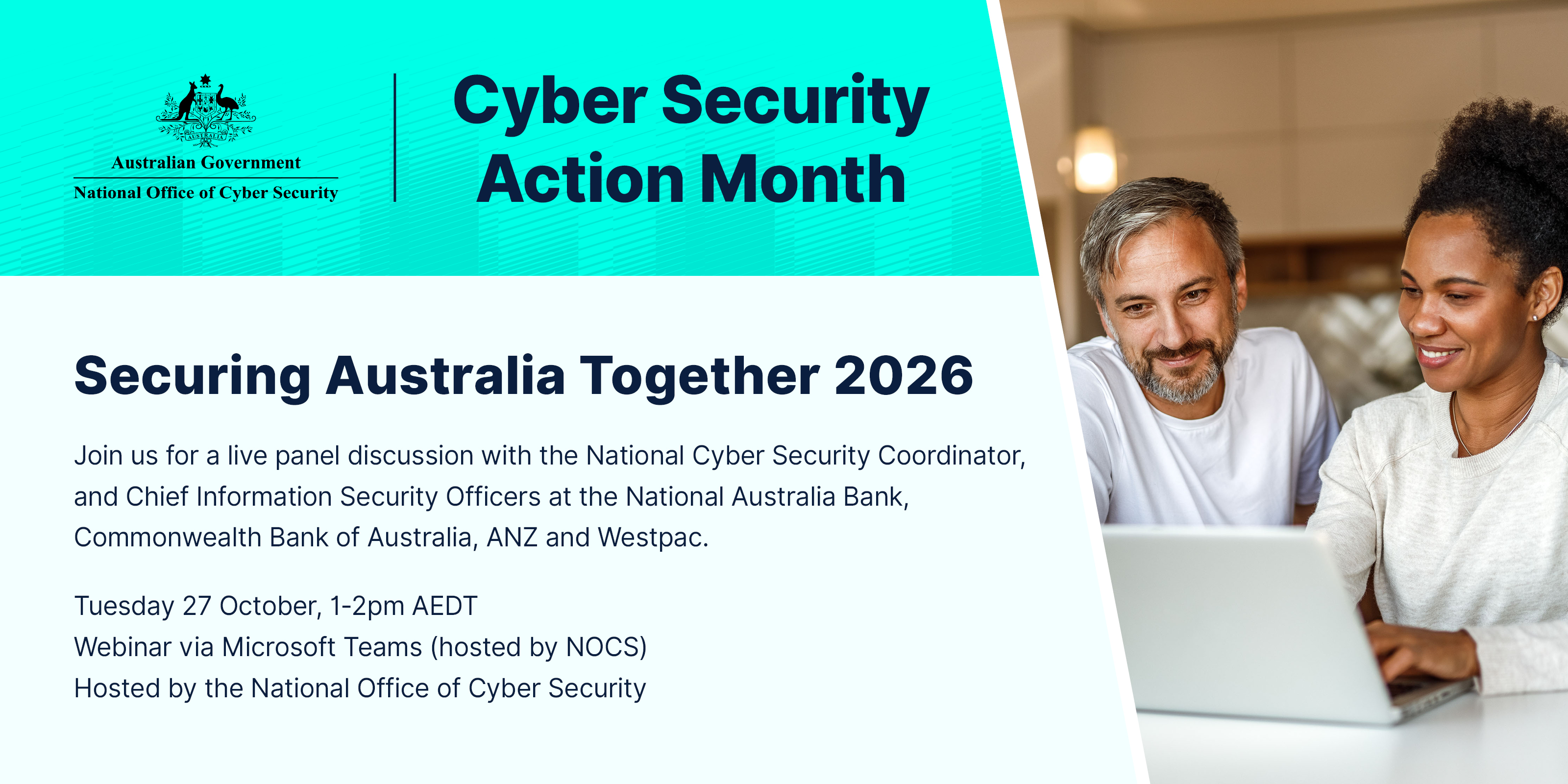
Join the 'Securing Australia Together' webinar

Securing Australia Together webinar 2026 

We're proud to support the Securing Australia Together webinar, hosted by the National Office of Cyber Security.

This session will provide businesses with insights into today's cyber environment and practical actions they can take to better protect their organisation and build cyber resilience.

Be part of the conversation and hear how government, industry and businesses can work together to build a more cyber-resilient Australia.

Register now

Access code: ANZ

Top